

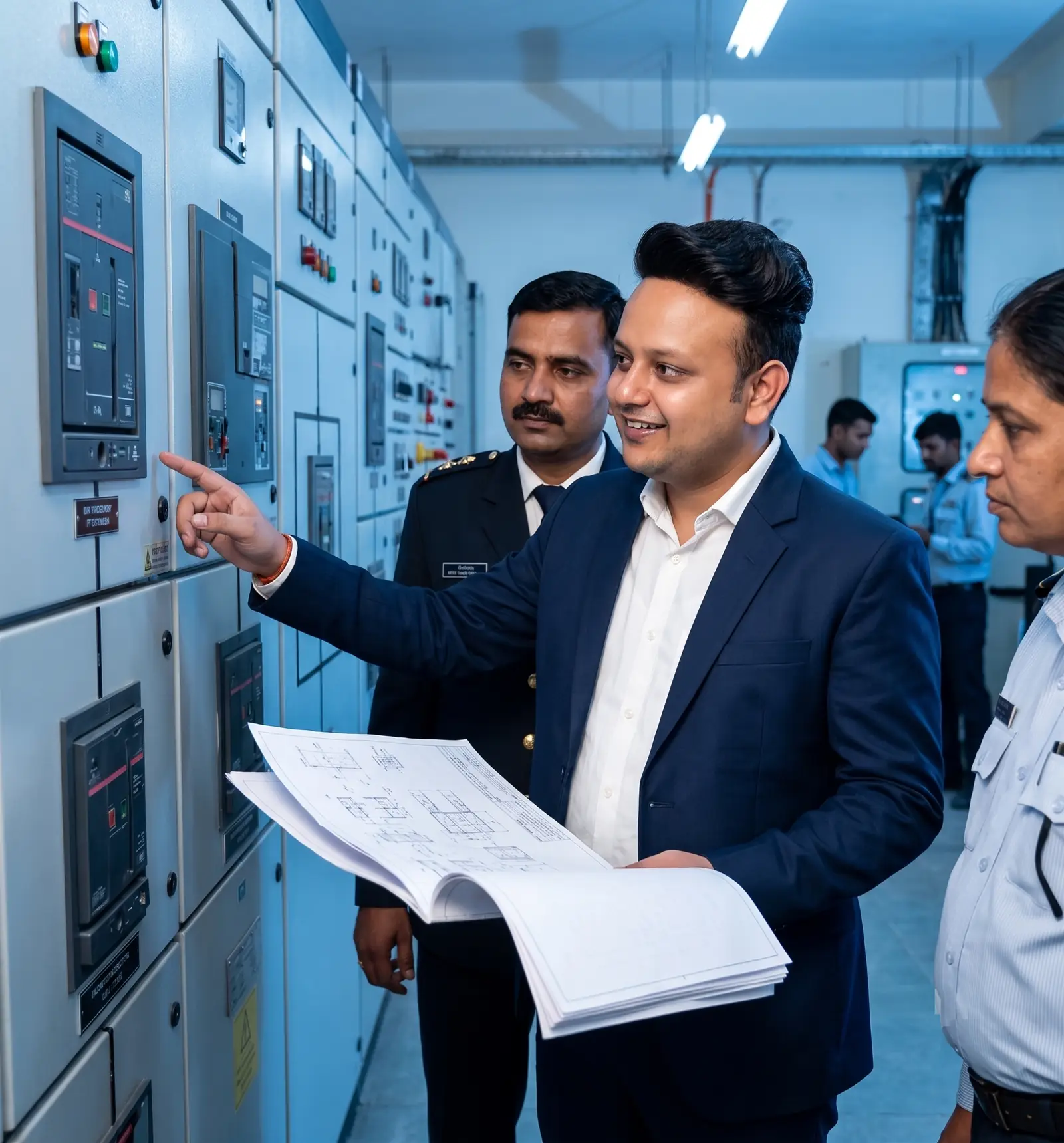
Before a new or changed electrical installation of a specified voltage or capacity is energised, the Electrical Inspector has to be satisfied that it is safe. In Rajasthan this is handled by the office of the Chief Electrical Inspector, and owners usually call the result “CEIG approval”. Without it, the DISCOM will not release a new HT connection or a load change, and an insurer or lender may refuse to proceed.
Which installations need Electrical Inspector approval
The requirement comes from the Electricity Act, 2003 and the Central Electricity Authority (Measures relating to Safety and Electric Supply) Regulations, 2023. In practice, approval is needed for:
- HT installations: transformers, HT panels, HT cables and substations.
- Diesel generator sets above the specified capacity and their changeover arrangements.
- Solar plants and other generating systems connected to the grid above the specified capacity.
- Lifts, escalators and installations in multi-storey and public buildings, where the state rules require it.
- Any addition or alteration to an installation that was approved earlier.
Some lower-voltage installations can be self-certified by the owner or a Chartered Electrical Safety Engineer instead. Whether your installation qualifies depends on its voltage, capacity and type, so check before you book the DISCOM release.
What goes into the approval file
Most delays start with the file, not the site. A complete file normally holds:
- The application in the prescribed form, with the fee deposited.
- A single line diagram and a layout drawing signed by a licensed contractor.
- Test reports: insulation resistance, earth resistance, transformer oil BDV and relay settings, as applicable.
- Test certificates of the equipment from the manufacturer.
- The completion certificate from the electrical contractor, with the supervisor’s details.
- Ownership or occupancy documents and the DISCOM’s demand or feasibility letter where relevant.
What happens at the inspection
The inspector visits the site and checks the installation against the drawings and the regulations: clearances, earthing, protection, cable routes, fencing, danger boards, fire safety near transformers and DG sets, and the test results. If something does not comply, the inspector issues observations. Once they are complied with and reported, the approval letter is issued and the installation can be energised.
The common reasons a file is held up
- Drawings that do not match the site, especially after late changes.
- Earth pits that are missing, undocumented or above the permitted resistance.
- Test reports that are old, unsigned or from an unrecognised lab.
- Inadequate clearances around transformers, panels and DG sets.
- No licensed contractor or supervisor named on the completion certificate.
How we help
Our engineers prepare the file, check the site before the inspector does, carry out the tests and stay with the case until the approval letter is issued. Our mentor retired as Chief Engineer of JVVNL and served as Rajasthan’s Electricity Ombudsman, so we know what the inspectorate and the DISCOM will look for.