

Energy Audit Services in Jaipur & Rajasthan
Detailed energy audits for factories, hospitals, hotels and buildings, led by a BEE certified energy auditor, with measured data and a costed list of savings.

How Energy Audit works
Electricity is one of the largest running costs for most factories and commercial buildings in Rajasthan, and a large share of it is often wasted: motors running lightly loaded, poor power factor, inefficient lighting and air conditioning, compressed-air leaks and avoidable maximum demand charges.
Our energy audits are led by a BEE certified energy auditor. We log the load, measure the major equipment, study 12 months of electricity bills and the tariff, and find where energy and money are lost. Every recommendation comes with the estimated saving, the investment and the payback period, so you can decide what to do first.
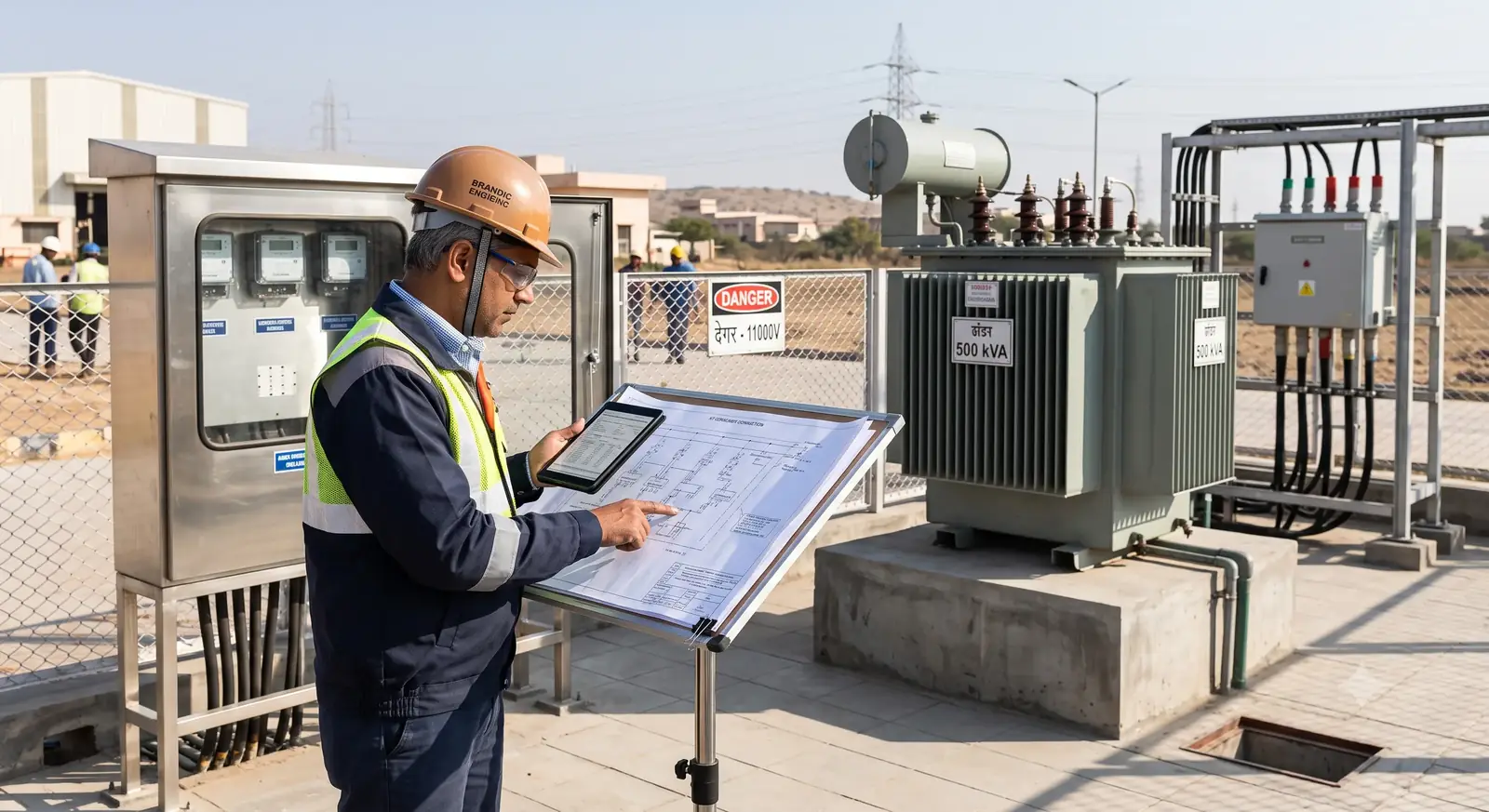
What our Energy Audit service covers
Bill and tariff analysis
Twelve months of bills, maximum demand, power factor and tariff category reviewed.
Load logging
Load profile, demand and power quality logged with a power analyser.
Motors and drives
Loading and efficiency of major motors, pumps, fans and compressors.
HVAC and lighting
Chillers, AC units and lighting checked against good practice.
Thermal survey
Thermography of panels and joints to find losses and hot spots.
Savings and payback
Each measure costed with saving, investment and payback.
Documents for Energy Audit
- Last 12 months electricity bills
- Single line diagram (if available)
- List of major equipment with ratings
- Production or occupancy data for the same period
- DG set fuel and running hours (if used)
- Earlier energy audit reports
Reports and approval letters
- Energy audit report with executive summary
- Measured load profiles and test results
- Energy balance by area or equipment
- Energy conservation measures with saving and payback
- Power factor and maximum demand recommendations
- Implementation priority list
Regulations behind Energy Audit
- Energy Conservation Act, 2001 and its amendments
- Bureau of Energy Efficiency (BEE) guidelines for energy audits
- Rajasthan tariff orders of RERC for demand and power factor charges
Energy Audit in 7 steps
Savings are estimates based on site conditions and operating hours at the time of the audit. Actual savings depend on implementation.
- 1
Scope
Sites, loads and audit level
- 2
Data
Bills, drawings, equipment list
- 3
Site survey
Walk-through of the plant
- 4
Measurement
Load logging and tests
- 5
Analysis
Losses and saving options
- 6
Report
Costed recommendations
- 7
Review
Briefing with management
Questions about Energy Audit
Answered by our engineers. Ask us if yours is not here.
Ask an engineerWhat is the difference between a walk-through and a detailed energy audit?
A walk-through audit is a short survey that finds the obvious savings. A detailed audit measures the main equipment, logs the load and gives a costed, measured list of savings with payback.
How long does an energy audit take?
A walk-through audit usually takes one or two days on site. A detailed audit of a factory takes longer, depending on its size and the number of areas to measure.
Who carries out the audit?
Our audits are led by a BEE certified energy auditor, with engineers using calibrated power analysers, thermal cameras and other instruments.
Will the audit stop our production?
No. Measurements are taken while the plant runs normally. A few checks may need a short planned shutdown, which we schedule with you.
Can you help implement the savings?
Yes. We can specify the equipment, review vendor offers and verify the savings after implementation.
Energy Audit across all 41 districts of Rajasthan
We handle this work with all three DISCOMs, from our Jaipur office. Find your area:
- Jaipur zone (JVVNL)Eastern Rajasthan
- Ajmer zone (AVVNL)Central and southern Rajasthan
- Jodhpur zone (JdVVNL)Western Rajasthan
Cities: Jaipur · Jodhpur · Udaipur · Kota · Ajmer · Bhilwara · Bikaner · Alwar and Bhiwadi · Sikar · Barmer and Balotra
Related electrical services in Rajasthan
See all 37 services Audits
Electrical Safety Audit
A full check of your installation against the CEA safety regulations and Indian Standards, led by a Chartered Electrical Safety Engineer, with tests and a prioritised action plan.
 Testing and condition
Power Quality Analysis
Logged measurement of harmonics, voltage variation, unbalance and power factor to find why equipment trips, overheats or fails, and what will fix it.
 Solar and renewable energy
Solar Feasibility Study
An independent study of whether solar works for your site: capacity, generation, grid connection, the rules that apply, cost, savings and payback.