

Electrical Safety Audit in Jaipur & Rajasthan
A full check of your installation against the CEA safety regulations and Indian Standards, led by a Chartered Electrical Safety Engineer, with tests and a prioritised action plan.
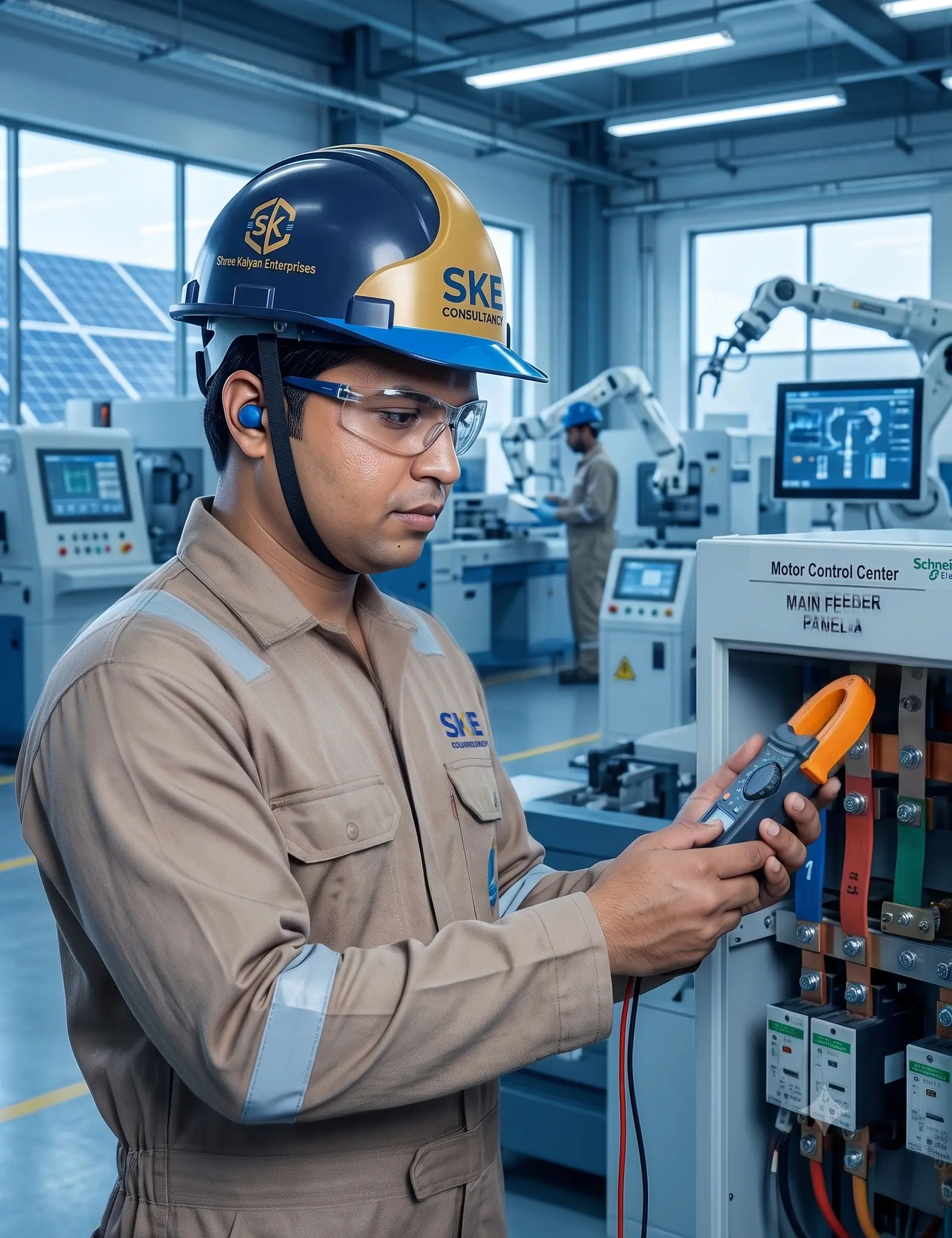
How Electrical Safety Audit works
Many fires and shocks in factories and buildings start with an electrical fault that could have been found earlier: a hot joint, an overloaded cable, an earth pit that no longer works, a missing earth leakage device or an unsafe working practice.
Our electrical safety audits are led by a Chartered Electrical Safety Engineer. We inspect the installation from the incoming supply to the final circuits, test earthing and insulation, scan panels with a thermal camera and check records and practices against the CEA (Measures relating to Safety and Electric Supply) Regulations, 2023 and the relevant Indian Standards.
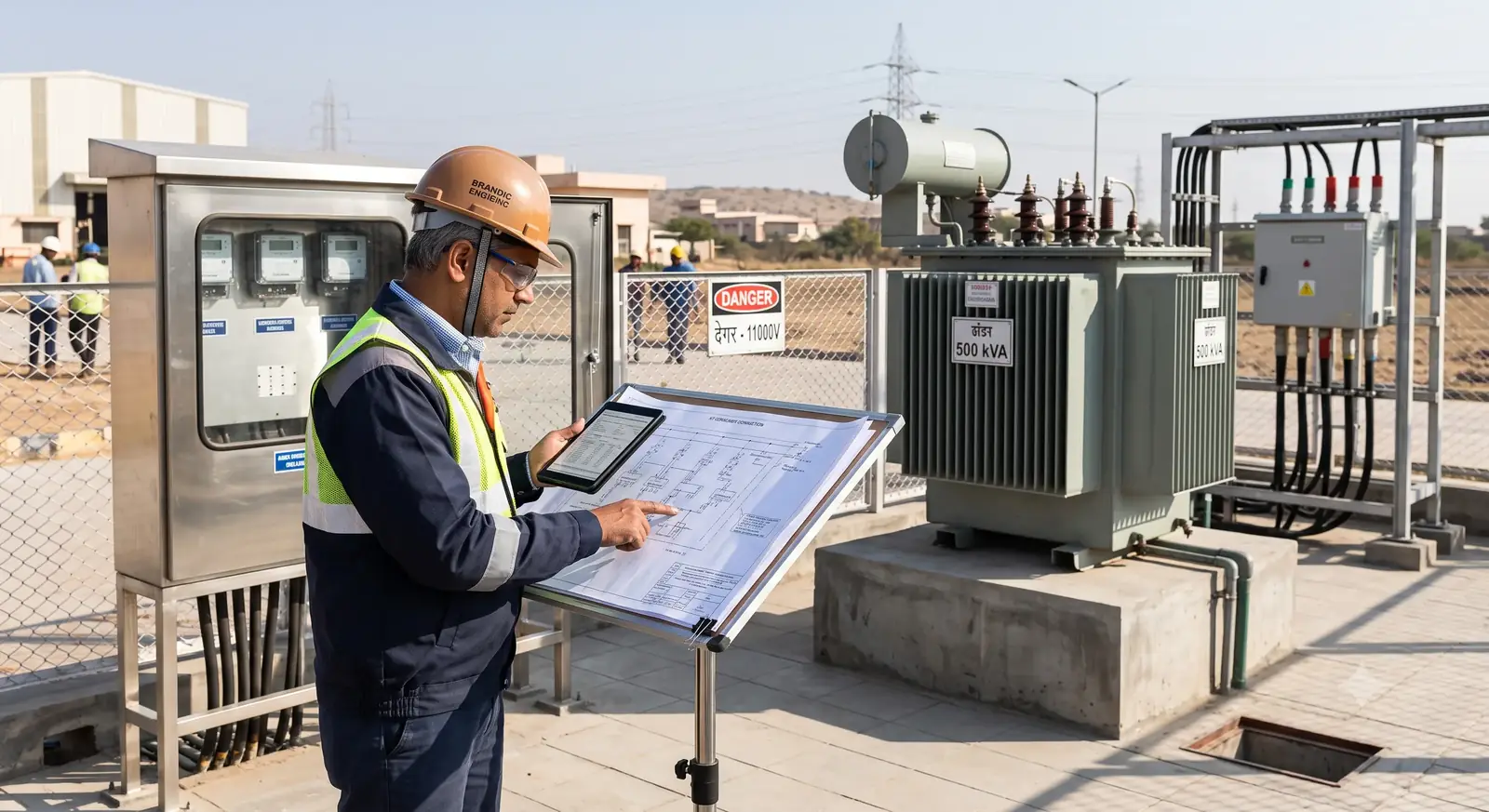
What our Electrical Safety Audit service covers
Incoming supply and substation
Transformer, HT panel, protection, clearances and fencing.
Earthing
Earth pits, earth resistance and continuity of protective conductors.
Panels and distribution boards
Ratings, coordination, loose connections and labelling.
Cables and wiring
Sizing, routing, joints and insulation resistance.
Thermography
Hot spots in panels and joints under load.
Practices and records
Permits, PPE, drawings, test registers and approvals.
Documents for Electrical Safety Audit
- Single line diagram and electrical layouts
- Earlier safety audit or inspection reports
- Electrical Inspector approvals for HT equipment
- Earth pit register and test records
- List of major equipment and connected load
- Maintenance records
Reports and approval letters
- Safety audit report with executive summary
- Observations with photographs and locations
- Earth resistance, IR and thermography results
- Risk rating and the applicable rule for each observation
- Prioritised action plan
- Compliance checklist for the Electrical Inspector
Regulations behind Electrical Safety Audit
- CEA (Measures relating to Safety and Electric Supply) Regulations, 2023
- IS 3043: Code of practice for earthing
- IS 732: Code of practice for electrical wiring installations
- National Electrical Code and National Building Code of India
Electrical Safety Audit in 7 steps
Findings reflect site conditions on the audit dates. We recommend an audit every year, and after any major change to the installation.

- 1
Scope
Areas and installations
- 2
Records
Drawings and past reports
- 3
Inspection
Visual survey of the installation
- 4
Testing
Earth, IR and thermography
- 5
Rating
Risk of each observation
- 6
Report
Prioritised action plan
- 7
Re-check
Optional after corrections
Questions about Electrical Safety Audit
Answered by our engineers. Ask us if yours is not here.
Ask an engineerWhat is checked in an electrical safety audit?
The supply and substation, earthing, panels, cables, protection devices, clearances, signage, records and safe working practices, supported by earth, insulation and thermal tests.
How often should we audit?
Most sites audit once a year. High-risk sites, insurers or your own policy may need more frequent audits.
Who leads the audit?
A Chartered Electrical Safety Engineer leads every audit, supported by our testing engineers.
Is the report accepted by insurers and the Electrical Inspector?
Our reports follow the CEA regulations and Indian Standards and are regularly used for insurance surveys and inspector visits.
Do you also audit fire safety and energy?
Yes. We offer fire safety audits and energy audits separately or together with the safety audit.
Electrical Safety Audit across all 41 districts of Rajasthan
We handle this work with all three DISCOMs, from our Jaipur office. Find your area:
- Jaipur zone (JVVNL)Eastern Rajasthan
- Ajmer zone (AVVNL)Central and southern Rajasthan
- Jodhpur zone (JdVVNL)Western Rajasthan
Cities: Jaipur · Jodhpur · Udaipur · Kota · Ajmer · Bhilwara · Bikaner · Alwar and Bhiwadi · Sikar · Barmer and Balotra
Related electrical services in Rajasthan
See all 37 services Audits
Fire Safety Audit
A fire safety audit that looks at how a fire could start, how it would spread and how ready your building and people are, with a clear list of what to fix.
 Audits
Energy Audit
Detailed energy audits for factories, hospitals, hotels and buildings, led by a BEE certified energy auditor, with measured data and a costed list of savings.
 Testing and condition
Thermography & Condition Assessment
Infrared thermography, calibration of meters and protection devices, and condition assessment of electrical assets to support predictive maintenance and prevent breakdowns.