

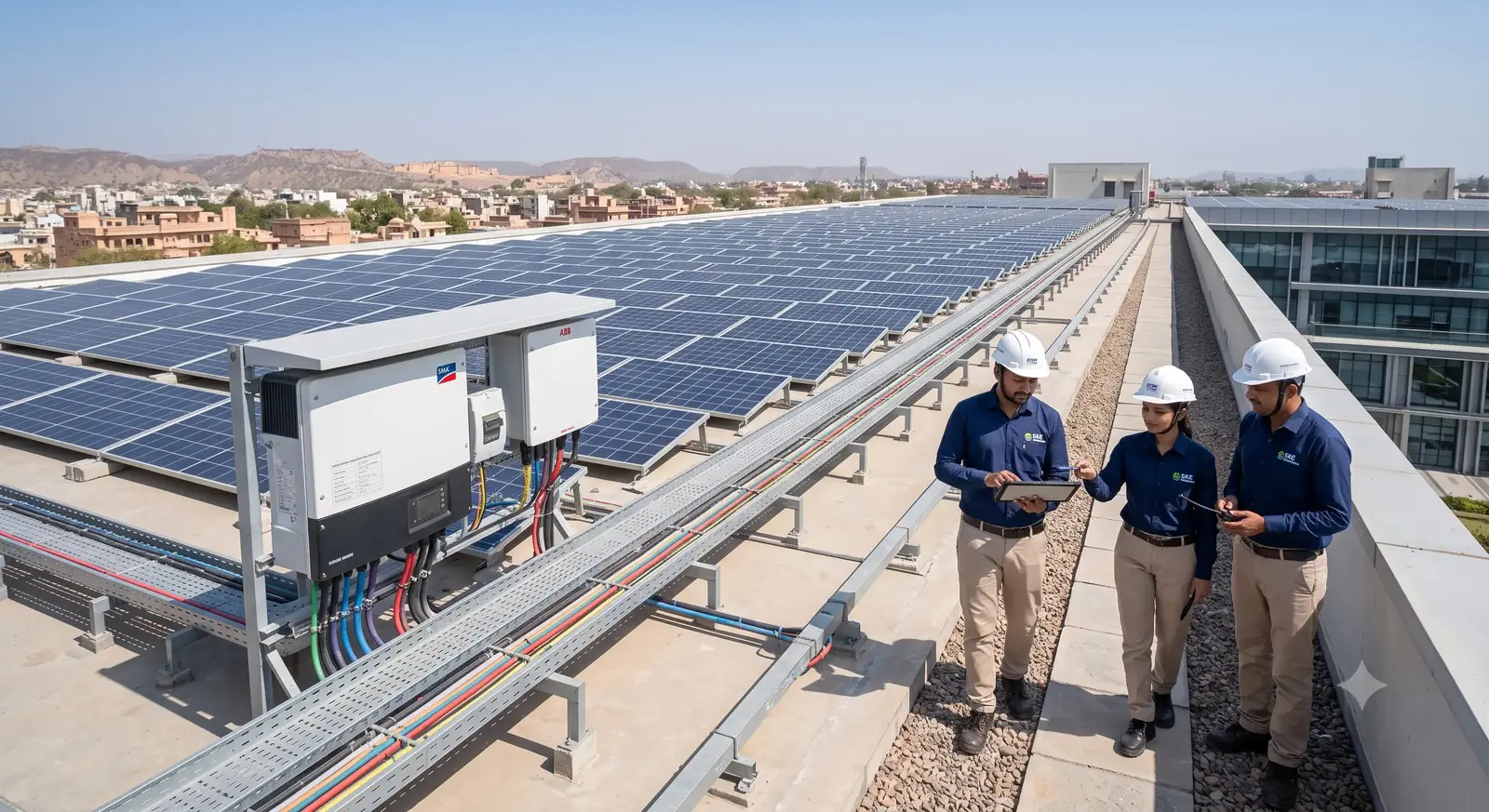
Net metering lets a consumer with rooftop solar use the grid as a store. Electricity you do not use is exported to the DISCOM; electricity you need when the sun is down is imported. At the end of the billing period you pay for the difference.
The rules behind net metering in Rajasthan
Net metering for new systems in Rajasthan is governed by the RERC (Grid Interactive Distributed Renewable Energy Generating Systems) Regulations, 2021 and their amendments. In 2024 the Commission raised the net metering limit from 500 kW to 1 MW, with the system capped at the consumer’s sanctioned load or contract demand, whichever is lower. Virtual and group net metering are being introduced through further amendments, so check the current position before planning a shared system.
What the bi-directional meter records
The DISCOM replaces your meter with a bi-directional (net) meter that records two figures separately:
- Import: units taken from the grid.
- Export: units your solar system sends to the grid.
Your bill is worked out on the net of the two. Fixed charges, duties and other charges in the tariff still apply. Any surplus is carried forward or settled as the regulations and your tariff category allow.
How much capacity to connect
Size the system from your actual consumption, not the largest number the rules allow. A system much larger than your use exports units that may be settled at a low rate. Look at twelve months of bills, the roof area and the sanctioned load. If the system needs more than your sanctioned load, apply for a load extension first.
The approval steps
- Application to the DISCOM for net metering, with the system details.
- Technical feasibility from the DISCOM.
- Installation by the vendor, with equipment that meets the applicable standards.
- Electrical Inspector approval where the system’s capacity requires it; below that, self-certification.
- Agreement with the DISCOM, meter testing and installation of the net meter.
- Synchronisation and commissioning, after which billing on the net meter starts.
Where it usually goes wrong
Missing CEIG approval for larger systems, a sanctioned load lower than the system, and incomplete earthing and protection on the AC side are the usual causes of delay. We handle the DISCOM application, the inspection file and the testing so the meter can be installed without repeat visits.