

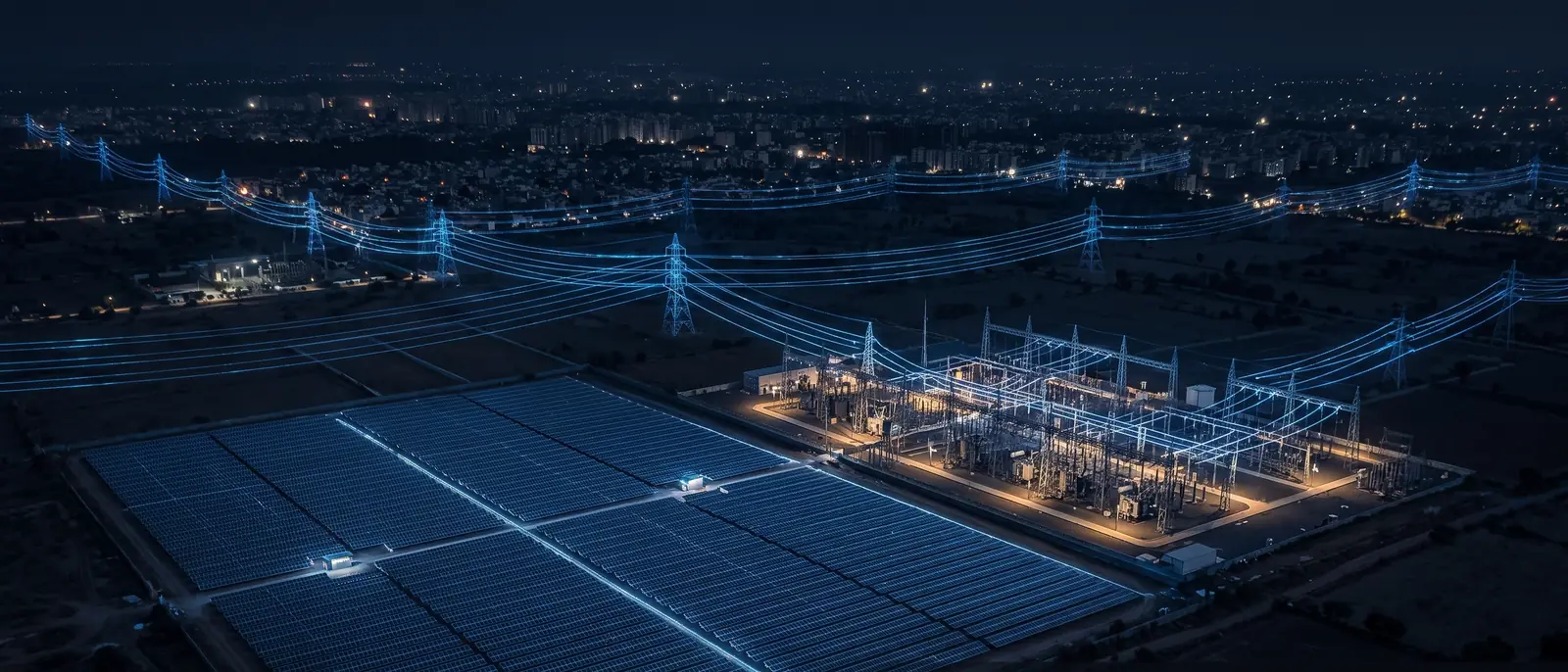
Open access lets a large consumer buy electricity from a source other than its DISCOM, using the transmission and distribution network. Green energy open access applies this to renewable power, so an industry can source solar or wind energy from a developer or its own plant elsewhere in the state.
The rules behind it
The Electricity (Promoting Renewable Energy Through Green Energy Open Access) Rules, 2022 lowered the threshold for green open access to 100 kW of contract demand, from one or more connections of the same consumer. RERC has framed regulations for Rajasthan that set the procedure and the charges. Captive consumers face different conditions from third-party buyers.
The charges that apply
Open access power is not free of grid charges. Depending on the arrangement, the consumer may pay:
- Transmission and wheeling charges, and losses.
- Cross-subsidy surcharge and additional surcharge, with concessions for green power in some cases.
- Banking charges, if surplus energy is banked.
- Scheduling, deviation and SLDC charges.
Whether open access saves money depends on these charges against your current tariff. Work the numbers before signing a power purchase agreement.
The application process
- Check eligibility and the current charges for your voltage level and category.
- Agree the supply with a generator, or plan a captive plant.
- Apply through the green energy open access registry and the state nodal agency.
- Arrange metering, the connection agreement and scheduling.
- Start drawing power once approval and meter readings are in place.
How we help
We assess whether open access is worth it for your load, prepare the application and handle the approvals with the DISCOM, the state nodal agency and the Electrical Inspector for the generating plant.